By Michelle Kurosawa, Founder & CEO, Additiveio —
Eighteen months is a number that appears in aerospace procurement timelines so frequently that it has become a kind of floor — an accepted fact of life for brackets and structural fittings in titanium alloy. When a program schedules a new casting, 18 months is the baseline assumption. Slippage goes up from there.
That number is not arbitrary, and it is not padding. It reflects a real sequence of manufacturing and qualification steps, each with its own supplier queue, its own drawing review cycle, and its own inspection process. But it is worth examining each step in that sequence to understand where the time actually goes — because when you make the comparison to LPBF, the steps that disappear are not the less important ones. They are the structurally unnecessary ones.
The casting timeline, step by step
A typical aerospace titanium investment casting qualification sequence, from final drawing release to first-article delivery, looks something like this:
Step 1: Tooling design and fabrication (8–14 weeks)
Investment casting requires a die or pattern from which wax models are produced. For a complex bracket geometry, the tooling design is itself an engineering effort: gating, risering, and mold cavity geometry must be designed to produce a sound casting with minimal shrinkage porosity in critical sections. Tooling fabrication for a production casting die in steel is typically 8–12 weeks from design completion. Any design error that surfaces after the first pour requires a tooling modification, adding 4–8 weeks.
Step 2: First wax pattern run and shell build (2–3 weeks)
Wax patterns are injection-molded from the tooling, assembled onto a gating tree, and coated in successive layers of ceramic slurry and stucco to build the investment shell. Shell build typically takes 1–2 weeks of layering and drying cycles before the shell is ready for burnout.
Step 3: Casting and initial cool-down (1–2 weeks)
The ceramic shell is fired to burn out the wax, preheated, and the titanium alloy is poured under vacuum (Ti reacts violently with atmospheric oxygen at casting temperatures). Controlled cool-down and shell removal follows. This is the step that most people picture when they think of casting — it is actually one of the shorter steps in the timeline.
Step 4: Rough machining (2–4 weeks)
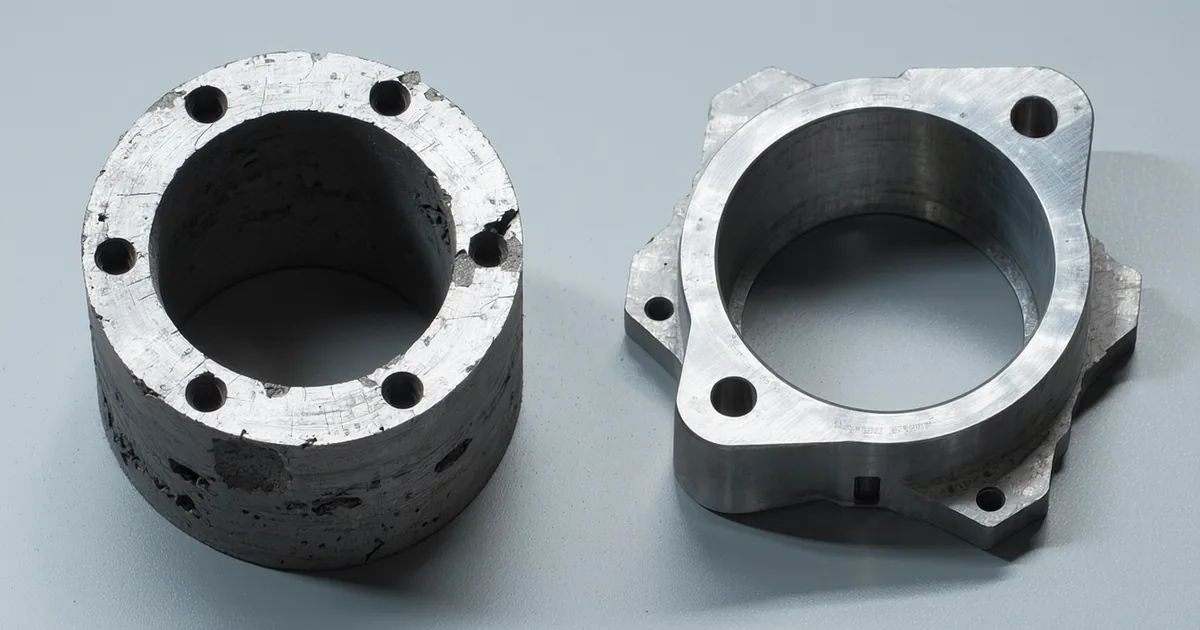
The as-cast part has excessive material on all machined surfaces, and casting skin that must be removed before any meaningful dimensional inspection is possible. Rough machining establishes reference datums and removes casting flash and risers.
Step 5: Solution anneal and HIP (2–4 weeks)
As-cast Ti-6Al-4V contains dendritic porosity from solidification shrinkage, and the as-cast microstructure has suboptimal mechanical properties. Solution annealing above the beta transus followed by controlled cooling refines the microstructure. HIP closes the solidification porosity. Both processes require specialized furnace equipment; lead time includes scheduling at an external HIP facility if not in-house.
Step 6: Finish machining and drilling (2–4 weeks)
After heat treatment, final machining brings critical surfaces and interfaces to drawing tolerance. Hole drilling, thread tapping, and surface treatment preparations are completed here.
Step 7: NDT — cycle 1 (1–2 weeks)
The finish-machined casting is submitted for nondestructive testing: typically fluorescent penetrant inspection (FPI) for surface defects and radiography or CT for internal defects. Results are reviewed and any discrepancies are dispositioned (accept/reject/repair). Repairs require a return trip through machining and NDT.
Step 8: First article inspection (FAI) (2–4 weeks)
The full first article inspection is performed: all drawing dimensions are measured and reported, material certifications are assembled, and the complete documentation package is reviewed for completeness. Any dimension that is out of tolerance triggers a nonconformance, which may require a machine correction, a drawing deviation request, or scrapping the part and making a new one.
Step 9: Qualification build — second pour (8–14 weeks)
For many aerospace programs, the first pour is a development build and the qualification build is a separate event that may use a modified tooling, revised heat treatment parameters, or a different material heat. The second pour repeats the entire manufacturing sequence from Step 2, using any lessons learned from the first pour. This step alone adds approximately 2–4 months to the timeline.
Step 10: NDT — cycle 2 and documentation compilation (2–4 weeks)
The qualification build is inspected, results are documented, and the qualification package is assembled from records generated across all prior steps. This is where the retrospective documentation challenge from the first article can resurface in the qualification build: records from external suppliers may need to be collected, verified, and cross-referenced against the current drawing revision.
Step 11: Customer review and approval (2–6 weeks)
The completed qualification package is submitted to the customer or prime for review. Questions, requests for additional data, and disposition of any nonconformances generate a review-and-response cycle that can take several weeks depending on customer backlog.
Total, in an optimistic scenario where each step executes without delays, tooling issues, nonconformances, or documentation problems: approximately 30–56 weeks, or roughly 7–14 months. In practice, with typical delays: 12–18 months is the realistic range. With any significant tooling or nonconformance issue: 18–24 months is possible.
The LPBF timeline, step by step
Now compare to the LPBF sequence for the same bracket geometry in Ti-6Al-4V:
Step 1: DfAM review and build plan (Week 1)
The customer's 3D CAD file (STEP or IGES format) is submitted with drawing. Our applications engineer reviews the geometry for printability: overhang angles, minimum wall thickness, feature accessibility for support removal, surface roughness requirements on critical faces, and tolerance callout analysis to flag features that will require post-build CNC machining rather than as-built LPBF surface. Feedback is returned within 48 hours. Revisions, if needed, are typically minor (fillet additions, support access reliefs) and can be completed in 1–2 days. Build plan and parameter lock follow, with customer sign-off.
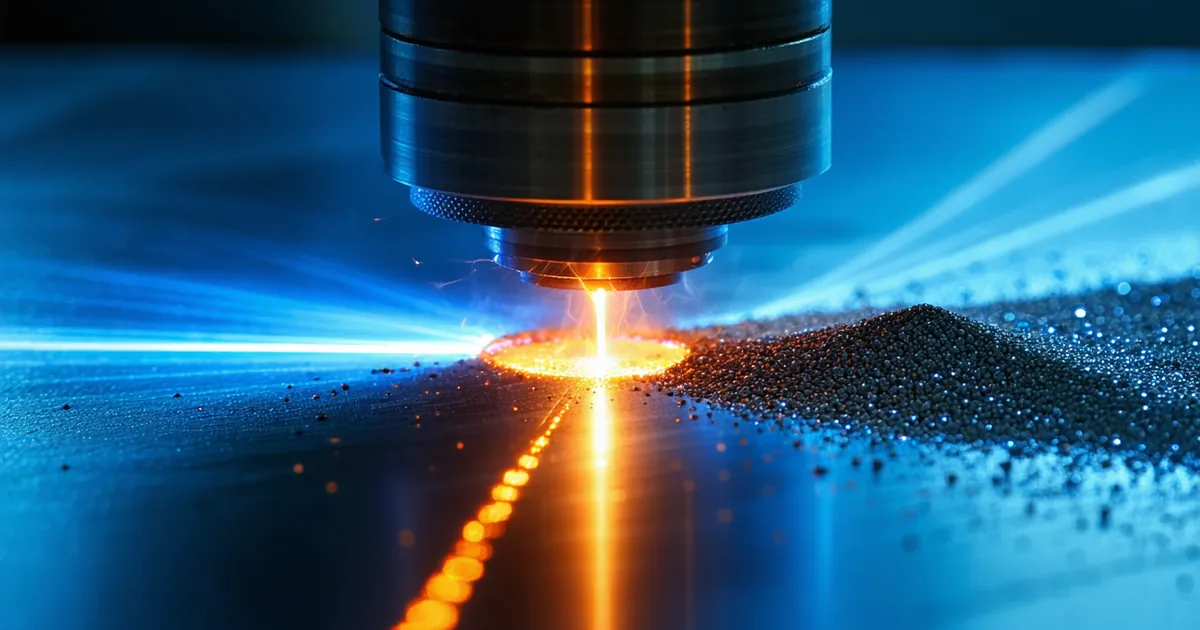
Step 2: LPBF build (Days 3–10, within Week 2)
Build time for a typical aerospace bracket at 30 µm layer thickness on a 255 × 255 mm build platform is 18–36 hours for a single-part or small-batch build. Powder loading, machine setup, and post-build cool-down before the chamber is opened add approximately 4–8 hours. Total elapsed time from build start to part removal: 1–2 days.
Step 3: Post-build processing (Weeks 2–3)
Stress relief anneal: approximately 2 hours at 650°C. HIP cycle: 3 hours at 900°C / 100 MPa argon (cycle time at an external HIP vendor, with scheduling: 5–10 business days including transit). Wire EDM separation from build plate: 2–4 hours. CNC finish machining of critical datums and tight-tolerance features: 1–3 days depending on complexity.
Step 4: Inspection (Week 4)
Dye penetrant examination of all accessible surfaces. Micro-CT internal scan (for parts with this requirement). CMM dimensional report of all critical and major features. Total inspection cycle: 3–5 business days.
Step 5: Documentation and delivery (Weeks 5–6)
Documentation package assembly: build record, powder CoC, incoming inspection record, HIP cycle record, CMM dimensional report, NDT report, material cert. Review and release sign-off. Customer delivery.
Total: 5–6 weeks from DfAM sign-off to documentation package delivery. There is no tooling lead time, no second qualification build, no retrospective documentation assembly, and no multi-supplier record collection cycle.
What actually disappears
The steps that LPBF eliminates from the casting qualification timeline are:
- Tooling design and fabrication: No die, no pattern, no tooling development cost or lead time. The build file is the tooling. Geometry changes are a CAD revision, not a tooling modification.
- The qualification second build: In LPBF with a pre-qualified parameter set, the first build is the qualification build. There is no development-vs.-qualification distinction when the process parameters are already locked and validated.
- Retrospective documentation collection: In an LPBF process with build-concurrent documentation, there is no documentation compilation phase. The package is assembled in parallel with manufacturing.
- Tooling error recovery cycles: Casting tooling errors that surface after the first pour add 4–12 weeks to the timeline. CAD errors in LPBF are discovered and corrected in the DfAM review, before any material is consumed.
The compounding cost of a drawing revision mid-tooling
One scenario that rarely appears in the headline lead-time comparison but has a disproportionate effect on actual program schedule: a drawing revision that arrives after tooling has been cut.
In investment casting, once the die steel is cut, any dimension change that affects the mold cavity requires either rework of the existing tooling (welding and re-machining, 3–6 weeks, and a weld that may affect the cavity surface quality) or a new tool. If the change involves a datum relocation or a feature that the existing gate and riser design cannot accommodate, a new tool is essentially mandatory. Programs that encounter two or three geometry iterations before production freeze regularly exceed the 18-month baseline by another 4–8 months. The tooling sunk cost is also non-recoverable: $20,000–$80,000 for a medium-complexity titanium investment casting die is not unusual, and that cost is written off on a revised drawing.
In LPBF, a drawing revision is a CAD file update. The DfAM review cycle re-runs for the changed features — typically 24–48 hours — and the build plan is updated. There is no tooling to modify, no sunk cost to abandon, and no schedule impact beyond the engineering review time. For programs where geometry is still being iterated against customer requirements or design analysis results, this difference is not marginal. It is the primary reason that development programs with evolving geometry have moved toward AM as a qualification path even when the production intent is eventually casting.
We are not suggesting that every geometry change in a casting program is avoidable or that casting suppliers could respond faster with better processes. We are observing that the structural absence of hard tooling in the LPBF path removes an entire category of schedule risk that is endemic to the casting qualification process.
Where LPBF is not a direct replacement
This comparison would not be complete without the honest caveat: LPBF is not the right process for every casting application. Parts that are large (beyond the build envelope of available LPBF equipment), parts with very high buy-to-fly ratio that are better suited to near-net casting, and parts where the casting supply chain is already qualified and producing acceptable parts with stable lead times — these are cases where the switching cost may exceed the benefit.
The programs where LPBF lead time reduction is most valuable are new-program qualifications, obsolescence replacements where legacy tooling no longer exists, design iterations where geometry is still evolving, and programs with schedule pressure that cannot tolerate a 12–18 month qualification baseline.
Additiveio is a manufacturing operation, not a design consultancy. We do not advise customers on whether to switch from casting — we provide LPBF manufacturing capability for programs where the switch has already been decided or is under evaluation. What we can offer is an honest timeline: six weeks from sign-off to documentation delivery, with a qualification process designed from the beginning to produce a complete, traceable package the first time.